,

.

.

Call your mother, but keep check on those car keys

Of the 45 “Instructions for Life” I typically share with my English students at the beginning of every semester, one of the most meaningful to me has always been #15 “Call Your Mother.”
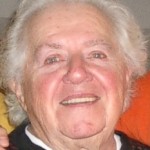
This post is dedicated to my mom, Rebecca Balcher, who passed away three years ago, five days after her 90th birthday.

It was our ritual to talk on the phone every day — and sometimes more frequently — like when the Academy Awards were on TV and we’d have to make a call after the announcement of each major award.
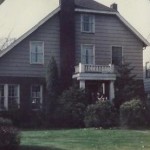
And four times a year I’d fly from California to Ohio to visit my mom, who lived alone in the home my five siblings and I had grown up in. One of those visits (when she was 82) was the last time I remember her “Driving Miss Shari.”

We’d set out early one evening to see a movie in a nearby neighborhood. Ninety minutes later we were back at home; neither of us remembered how to get to the theater. Fortunately, I knew how to get us home.

A doctor diagnosed my mom with Alzheimer’s shortly thereafter, and we had to take away her car keys. I now have some idea of how she felt. I miss her very much

Do you know any loved ones who ought to set aside their car keys?

18 responses to “Call your mother, but keep check on those car keys”

  1. Connie Balcher Avatar

    It was nice to hear that commentary as I had the same mother! I also miss her very much. As for Alzheimer’s, many of us sadly deal with the experience of limiting what our elderly parents are able to do safely. We do the same for our children. Sometimes we have to impose restrictions on them for their own good. I don’t think doctors know everything, but I think that they feel responsible to make decisions to limit our own driving or other activities (even if we don’t agree)– for our own safety and for the safety of others. I would hate to hear that someone had an accident at the wheel which could have been avoided.

  2. Sandra Merlo Avatar

    I laughingly remember a different kind of driving story of my mother’s. She was only in her 50’s but was taking my dad’s mom (86) shopping. Always wanting to seem totally prepared for every eventuality (and every imagined criticism) my mother mapped out the shopping center, discussed potential stores with my grandmother, and even decided ahead of time where they would eat lunch. What could go wrong?

    Hours later, when they got back to the car, it would not start. Frustrated, my mom noticed a notice on the windshield, from parking lot security. They asked her to please shut off her car in the future and not leave it running in the parking lot, doors locked. Truth be told, she had run out of gas… And, yes, trying to impress my grandmother always made my mom that nervous.

    1. sharisax Avatar
      sharisax

      Sandra,
      I, too, was laughing heartily while reading your story. And, of course, one good story reminds us of another.

      Before we took away mom’s keys and before we knew she had Alzheimer’s, there were clues: On one of my visits I noticed stockpiles of cleaning supplies, soft drinks, and other items that stores like to put on special. Apparently, my mom would go shopping, find a great sale, load up, bring the items home . . . and then hide them in places when she found that she’d already stocked up on earlier occasions.

      I miss my mom.

      1. sandra merlo Avatar

        Shari, I will bet when you think of your mom that you think of her good days and sense of humor. I find way too many people who get hung up on someone’s bad days, a poor decision, or a one-time opinion. Here is where I am coming from:

        A friend talks about her former mother-in-law in only negative terms, concentrating on the forgetfulness she experienced in the last years of her life. While it is true that she drove poorly and likely should have had her license revoked, she was also a great entertainer and a champion for her kids.

        I am thinking that we can focus on the 99% good days and let the deceased take the faults of their lives with them! And, if it is true that what we focus on comes true, we are paving the road to our own futures with compassion and not criticism.

        Too bad I never met your mom but am pretty sure there are a lot of her good qualities in you!

        1. sharisax Avatar
          sharisax

          Sandra, two beautiful things come to mind with this opportunity to chat: (1) to hear a story that reminds us what it means to be human and (2) another opportunity to “kvell” [i.e. fill up with emotion] in memory of my wonderful mom. Thanks for the vote of confidence; I’m proud to carry on some of my mom’s educational efforts.

  3. Sally Jenkins Avatar

    We tried! logical conversation about it was futile. anonymous letters to the DMV were the way to go. but alas, Delaware DMV told her to guess at the vision test (she’s blind in one eye). and then passed her. hmmm. suggestions?

  4. Connie Balcher Avatar

    This story of an aging couple reminded me of DRIVING MISS SHARI

    No Left Turns

    This is a story of an aging couple . . . told by their son who was President of NBC NEWS, Michael Gartner:

    My father never drove a car. Well, that’s not quite right. I should say I
    never saw him drive a car.

    He quit driving in 1927, when he was 25 years old, and the last car he drove
    was a 1926 Whippet.

    “In those days,” he told me when he was in his 90s, “to drive a car you had
    to do things with your hands, and do things with your feet, and look every which
    way, and I decided you could walk through life and enjoy it or drive through
    life and miss it.”

    At which point my mother, a sometimes salty Irishwoman, chimed in:
    “Oh, bull shit!” she said. “He hit a horse.”

    “Well,” my father said, “there was that, too.”

    So my brother and I grew up in a household without a car. The neighbors all
    had cars — the Kollingses next door had a green 1941 Dodge, the VanLaninghams
    across the street a gray 1936 Plymouth, the Hopsons two doors down a black 1941
    Ford — but we had none.

    My father, a newspaperman in Des Moines , would take the streetcar to work
    and, often as not, walk the 3 miles home. If he took the streetcar home, my
    mother and brother and I would walk the three blocks to the streetcar stop, meet
    him and walk home together.

    My brother, David, was born in 1935, and I was born in 1938, and sometimes,
    at dinner, we’d ask how come all the neighbors had cars but we had none. “No one
    in the family drives,” my mother would explain, and that was that.

    But, sometimes, my father would say, “But as soon as one of you boys turns
    16, we’ll get one.” It was as if he wasn’t sure which one of us would turn 16
    first.

    But, sure enough , my brother turned 16 before I did, so in 1951 my parents
    bought a used 1950 Chevrolet from a friend who ran the parts department at a
    Chevy dealership downtown.

    It was a four-door, white model, stick shift, fender skirts, loaded with
    everything, and, since my parents didn’t drive, it more or less became my
    brother’s car.

    Having a car but not being able to drive didn’t bother my father, but it
    didn’t make sense to my mother.

    So in 1952, when she was 43 years old, she asked a friend to teach her to
    drive. She learned in a nearby cemetery, the place where I learned to drive the
    following year and where, a generation later, I took my two sons to practice
    driving. The cemetery probably was my father’s idea. “Who can your mother hurt
    in the cemetery?” I remember him saying more than once.

    For the next 45 years or so, until she was 90, my mother was the driver in
    the family. Neither she nor my father had any sense of direction, but he loaded
    up on maps — though they seldom left the city limits — and appointed himself
    navigator. It seemed to work.

    Still, they both continued to walk a lot. My mother was a devout Catholic,
    and my father an equally devout agnostic, an arrangement that didn’t seem to
    bother either of them through their 75 years of marriage.

    (Yes, 75 years, and they were deeply in love the entire time.)

    He retired when he was 70, and nearly every morning for the next 20 years or
    so, he would walk with her the mile to St. Augustin’s Church.
    She would walk down and sit in the front pew, and he would wait in the back
    until he saw which of the parish’s two priests was on duty that morning. If it
    was the pastor, my father then would go out and take a 2-mile walk, meeting my
    mother at the end of the service and walking her home.

    If it was the assistant pastor, he’d take just a 1-mile walk and then head
    back to the church. He called the priests “Father Fast” and “Father Slow.”

    After he retired, my father almost always accompanied my mother whenever she
    drove anywhere, even if he had no reason to go along. If she were going to the
    beauty parlor, he’d sit in the car and read, or go take a stroll or, if it was
    summer, have her keep the engine running so he could listen to the Cubs game on
    the radio. In the evening, then, when I’d stop by, he’d explain: “The Cubs lost
    again. The millionaire on second base made a bad throw to the millionaire on
    first base, so the multimillionaire on third base scored.”

    If she were going to the grocery store, he would go along to carry the bags
    out — and to make sure she loaded up on ice cream. As I said, he was always the
    navigator, and once, when he was 95 and she was 88 and still driving, he said to
    me, “Do you want to know the secret of a long life?”

    “I guess so,” I said, knowing it probably would be something bizarre.

    “No left turns,” he said.

    “What?” I asked.

    “No left turns,” he repeated. “Several years ago, your mother and I read an
    article that said most accidents that old people are in happen when they turn
    left in front of oncoming traffic.

    As you get older, your eyesight worsens, and you can lose your depth
    perception, it said. So your mother and I decided never again to make a left
    turn.”

    “What?” I said again.

    “No left turns,” he said. “Think about it.. Three rights are the same as a
    left, and that’s a lot safer. So we always make three rights.”

    “You’re kidding!” I said, and I turned to my mother for support.
    “No,” she said, “your father is right. We make three rights. It works.”
    But then she added: “Except when your father loses count.”

    I was driving at the time, and I almost drove off the road as I started
    laughing.

    “Loses count?” I asked.

    “Yes,” my father admitted, “that sometimes happens. But it’s not a problem.
    You just make seven rights, and you’re okay again.”

    I couldn’t resist. “Do you ever go for 11?” I asked.

    “No,” he said ” If we miss it at seven, we just come home and call it a bad
    day. Besides, nothing in life is so important it can’t be put off another day
    or another week.”
    My mother was never in an accident, but one evening she handed me her car
    keys and said she had decided to quit driving. That was in 1999, when she was
    90.

    She lived four more years, until 2003. My father died the next year, at 102.

    They both died in the bungalow they had moved into in 1937 and bought a few
    years later for $3,000. (Sixty years later, my brother and I paid $8,000 to have
    a shower put in the tiny bathroom — the house had never had one. My father
    would have died then and there if he knew the shower cost nearly three times
    what he paid for the house.)

    He continued to walk daily — he had me get him a treadmill when he was 101
    because he was afraid he’d fall on the icy sidewalks but wanted to keep
    exercising — and he was of sound mind and sound body until the moment he died.

    One September afternoon in 2004, he and my son went with me when I had to
    give a talk in a neighboring town, and it was clear to all three of us that he
    was wearing out, though we had the usual wide-ranging conversation about
    politics and newspapers and things in the news.

    A few weeks earlier, he had told my son, “You know, Mike, the first hundred
    years are a lot easier than the second hundred.” At one point in our drive that
    Saturday, he said, “You know, I’m probably not going to live much longer.”

    “You’re probably right,” I said.

    “Why would you say that?” He countered, somewhat irritated.

    “Because you’re 102 years old,” I said..

    “Yes,” he said, “you’re right.” He stayed in bed all the next day.

    That night, I suggested to my son and daughter that we sit up with him
    through the night.

    He appreciated it, he said, though at one point, apparently seeing us look
    gloomy, he said:
    “I would like to make an announcement. No one in this room is dead yet”

    An hour or so later, he spoke his last words:

    “I want you to know,” he said, clearly and lucidly, “that I am in no pain. I
    am very comfortable. And I have had as happy a life as anyone on this earth
    could ever have.”

    A short time later, he died.

    I miss him a lot, and I think about him a lot. I’ve wondered now and then how
    it was that my family and I were so lucky that he lived so long.

    I can’t figure out if it was because he walked through life,
    Or because he quit taking left turns. ”

    Life is too short to wake up with regrets.

    So love the people who treat you right.

    Forget about the one’s who don’t.

    Believe everything happens for a reason.

    If you get a chance,take it & if it changes your life, let it.

    Nobody said life would be easy, they just promised it would most likely be worth
    it.”

    ENJOY LIFE NOW – IT HAS AN EXPIRATION DATE!

  5. Chuck Balcher Avatar
    Chuck Balcher

    For all mom’s great traits, compassion for other people was by far her most precious.

    1. sharisax Avatar
      sharisax

      Thanks for weighing in Chuck. But how about joining the party on my first blog where I’m collecting 500 comments: http://sharisax.com/DrivingMissShari/2010/08/how-to-become-rich-famous-on-the-web/

  6. kathy bloodworth Avatar
    kathy bloodworth

    My grandmother was an amazing woman. Had she been born in a different time, there’s no telling what she would have been able to do. She came from a family of 13 kids (hard to imagine on many levels!), was not highly educated but read voraciously so she could converse with almost anyone about SOMETHING. She opened her home to us, to our friends and delighted in getting into her car and going whenever and wherever she pleased. My mother used to call her “lead foot” (she liked to put the pedal to to the metal at times.. go granny go!). Then her eyesight started to fail. She was diagnosed with Glaucoma and as time went on, the inevitable happened. We took her license away. It broke her spirit. She was never quite the same again. Losing that license… no small thing. She did not live in a place where there was an abundance of convenient public transportation, but I don’t think it would have mattered to her even it she had that access. I adored her and I will never forget how it changed her.

    1. sharisax Avatar
      sharisax

      Kathy, thank you so much for sharing this beautiful story. After my very brief experience I do know firsthand some of the pains & losses, and, of course, now I appreciate this “privilege” in ways I had not previously imagined.

      I would like to support efforts to address the myriad of problems facing those who can no longer drive — especially those who really shouldn’t or can’t have a set of their own car keys ever again.

  7. sally jenkins Avatar
    sally jenkins

    We wrote an anonymous letter to the DMV regarding Mom! That didn’t work even though she’s blind in one eye and cannot see the Eye Chart…she guessed! So we just prayed every night that our mother and others on the road would be alive for another day. God answered…he killed the car. and touched her heart so that she accepted it. She gets lonely ’cause she doesn’t get out much now. So her children call her more often. We do love her. She was and still is a gooood mommy.

  8. sally jenkins Avatar
    sally jenkins

    Well, I just may be the next one in my family to have to give up the keys — 19 years before my mother! (I’m just turning 60.)

    Years ago I stopped driving at night to unfamiliar places, but just last night en route to the library (20+ times before – and at night), I made a left turn into a field! Thank God it wasn’t a deep ditch. We have a lot of them here. I couldn’t see the intersection with all headlights from the oncoming rush hour traffic. I thought I was there. Obviously not! I was shaken and could have caused a very bad accident.

    Just last week while chatting with Mother…she said, “when it starts to feel uncomfortable, it’s time to stop.” I think it’s time to stop driving at night. Oh, and I’m overdue for an eye exam. I’ll make that appt today! Unlike my mother, however, I simply love being chauffered and loved public transportation when I lived in the city. I’ve had future plans to budget for taxis/trains, but I may have to step that up, huh?

    1. sharisax Avatar
      sharisax

      Seems like a WISE decision to me . . . Too many people wait until they really aren’t capable of making appropriate choices.

  9. Suzie Adams Koide Avatar

    Hi, My 90-year-old dad is still driving and is blind in one eye.

    I don’t think he drives very much, but still he shouldn’t be driving at all. Good questions, how to have the car keys be permanently misplaced???

    1. sharisax Avatar
      sharisax

      Suzie, is your Dad in California . . . or another state? Have you checked out the laws there?

  10. If an elderly relative can’t drive . . .

    If your elderly relative can’t drive, then they probably have a few problems. It could be they are ill or have memory problems due to age or Alzheimer’s; they may have eyesight problems and can’t actually see to drive. Some eyesight problems like serous detachment involve the retina and can sometimes be fixed and sometimes they are permanent. Macular degeneration is a degenerative condition effecting older people and usually permanent. The usual problem is cataracts and these can be taken care of with surgery.

    I had this surgery last year and so I prepared for it. I needed someone to drive me, and so I took taxis for awhile and I could only see out of one eye. It was quite scary when my ‘good’ eye itched and I rubbed it while driving. My eyesight got quite bad, and when my sister drove me to hospital, I asked her if everything looked clear on the way back; it was misty to me! It was the lubricating drops they gave me to lubricate my eyes; I stopped using them. She also drove me to the city hospital for an appointment with the surgeon.

    They say we go into our second childhood as we get older; we certainly need support. When the surgeon asks if you are ready for surgery, he is actually asking if you need to be able to see again. It is worrying when you can’t see out of one eye and the other one may be failing. You have to say yes, even though you want to say no!

    The guy who was an ex-soldier and had seen the world talked tough and said it hurt like hell after the surgery; was wrong. It is nerve-wracking waiting for the surgery, but doesn’t hurt. The surgeon assessed me and marked up my left eye; I immediately asked him to mark up the right eye, the one with the cataract. Don’t ask for the right eye to be marked up if you want the left eye doing of course. This mixup enabled me to tell him the joke about the guy who had his leg amputated. After the surgery the surgeon said, “I have good news and bad news; the bad news is we cut of the wrong leg; the good news is your bad leg is getting better!”

    I listened to Mozart and Beethoven using my MP3 player and looked out of the hospital window while I waited. I had a bag with all my stuff in, including a dressing gown so my rear wasn’t protruding out of the hospital gown, like it usually is. A hot young nurse led me to theatre where an anaesthetist checked me over and pronounced I wasn’t nervous enough to be sedated. I was still, I was calm; I was too scared to move… I was definitely still after I was covered up with only my right eye showing and clamped open. He liquidised the lens in my eye with ultrasound; the machine made a strange noise and an even stranger noise came in the form of Bollywood music in the background. The surgeon hummed to the music, I breathed in oxygen from a tube carefully placed under the sheet. I felt the reassuring hand of a large Afro-Caribbean nurse holding my hand as the first incision was made. It didn’t take long for the new plastic lens to be slipped in and I felt something like stitching. Then it was all over and the surgeon was repeating my joke about the guy who had his leg amputated to the anaesthetist. I got off the trolley and followed the nurse back to the ward and that was it; nearly.

    My sister returned from shopping to take me home; unfortunately she forgot she was going to my house and headed for hers and we got lost. If you are transporting an elderly relative who can’t see; don’t get lost it is very irritating. I used a poly drug to heal my eye, which is a medicine that contains more than one drug. This stuff contained an antibiotic to stop infection and dexamethazone; a powerful steroid to reduce the inflammation fast.

    I was fine and welcomed the workmen into my home to do the re-wire, fit the new kitchen, put a new roof on and fill the place with eye irritating dust a week later.

    Remember to call your elderly relative; elderly or at least something like the wise one, old is as impolite as calling an overweight person, fat or a dreamless one, stupid.

    I might do digestive problems in your advancing years and how this affects driving tomorrow.

    A woman 80 years old had cataract surgery; she said “Doc, will I be able to drive after this?” The surgeon reassured her and said, “I don’t see why not.”

    “Oh, good,” She exclaimed, “I have always wanted to be able to drive!”

    People over 50 years old sometimes complain of nurses or caregivers shining torches in their eyes just as they close their eyes and try to sleep. Those white flashes of light are neurons, firing all by themselves and producing flashes of white light; it’s quite common, even my optician gets it.

    I’ll be back…

Leave a Reply to sharisax Cancel reply

Your email address will not be published. Required fields are marked *